

Venture 4x4 Fitment Centre

JMACX · Land Cruiser 70 Series

Land Cruiser Coil Conversions

A JMACX bolt-in coil conversion replaces the rear leaf springs on the Land Cruiser 70 Series with a purpose-engineered coil-spring rear end, improving ride comfort, axle control and stability across changing vehicle loads.

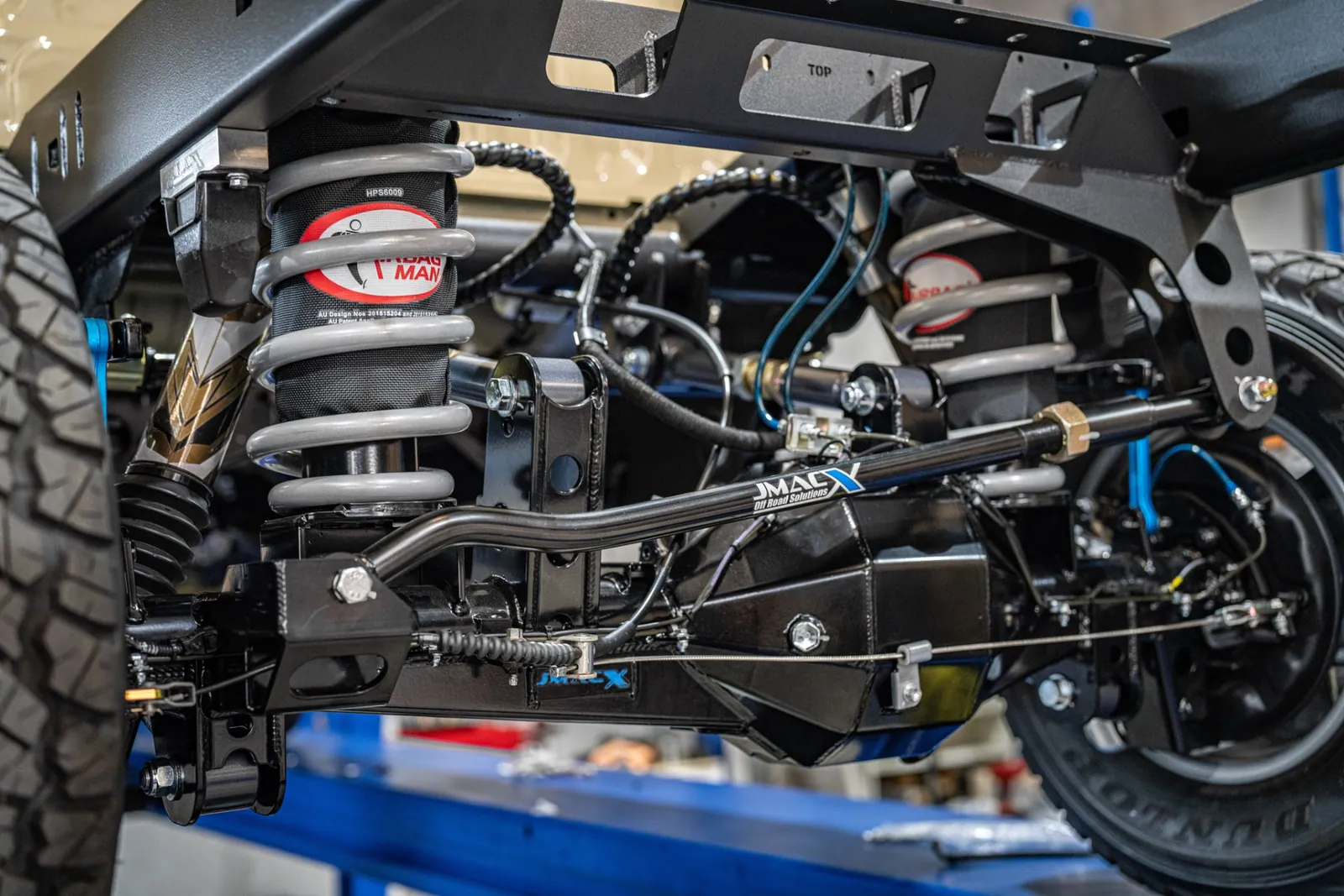
JMACX rear coil conversion fitted under a Land Cruiser 79: coil springs, trailing arms, panhard rod and wide-track differential housing

The quick explanation

What is a coil conversion?

A coil conversion replaces the factory rear leaf-spring suspension with a coil-sprung system that separates ride support from axle location. A fully welded structural cradle bolts into the chassis through a three-axis taper-lock system, while four trailing arms and a rear panhard rod form a heavy-duty 5-link arrangement that controls the differential under drive, braking and lateral loads.

  • 76 Series
  • 78 Series
  • 79 Series
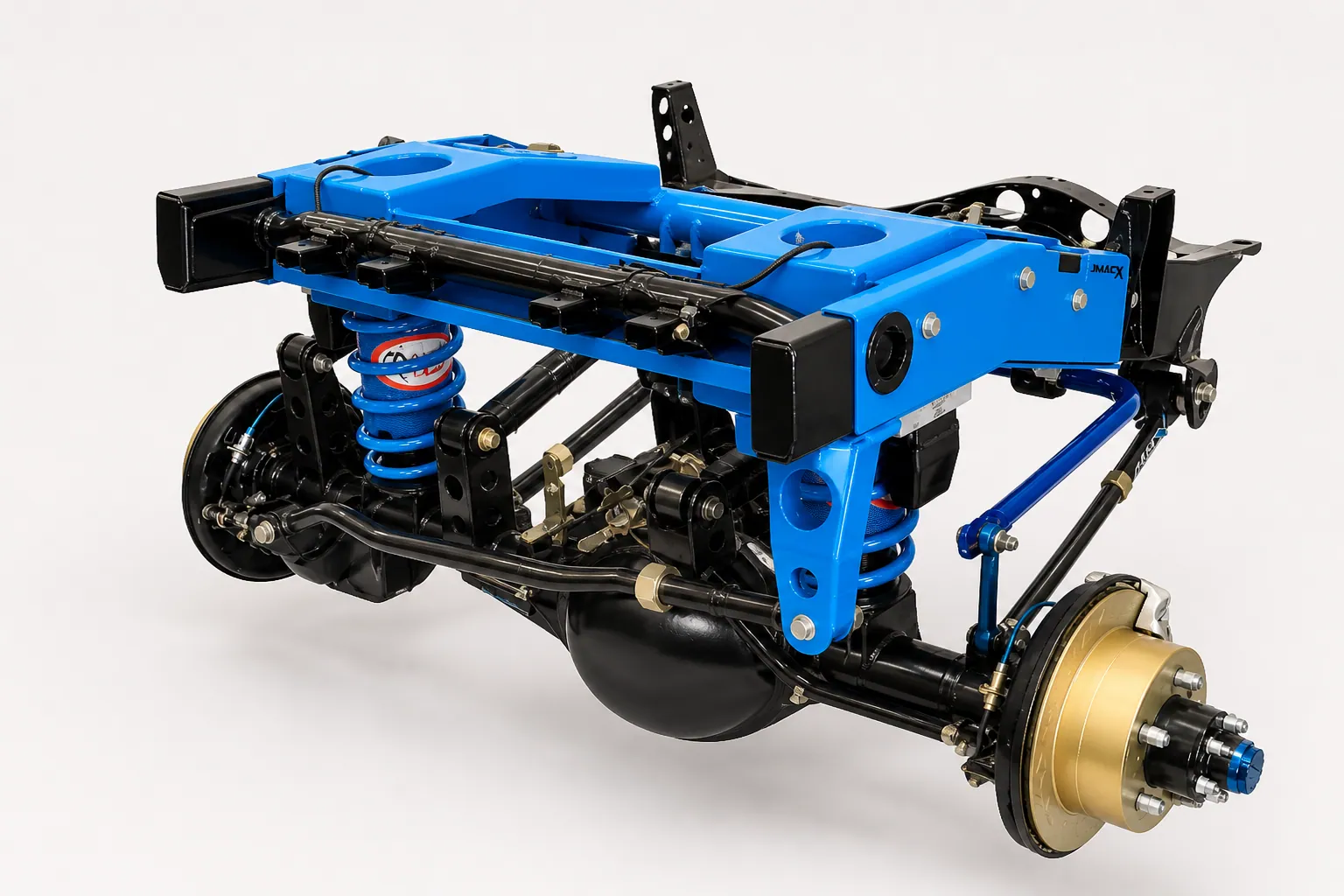
Assembled JMACX rear coil conversion: blue structural cradle, coil springs, trailing arms, panhard rod and full-floating differential housing

The practical outcome

What are the benefits?

  1. Ride comfort — loaded or empty

    Coil springs support touring loads without the harsh response of an unladen leaf pack. The result is a calmer cabin, less rebound over washouts and more consistent comfort from daily driving to a fully loaded expedition build.

  2. Safety, stability and axle control

    Four trailing arms manage acceleration, braking and axle rotation while the panhard rod resists lateral movement. This keeps the rear axle controlled under cornering forces, offset payloads and changing terrain.

  3. True track-width correction

    The fabricated wide-track differential housing corrects the factory 100 mm front-to-rear track mismatch, helping the rear wheels follow the front wheel path and improving stability on loose or uneven surfaces.

  4. GVM and rear-axle capacity

    The system supports 3900 kg or 4200 kg GVM configurations and increases the rear axle load rating to 2850 kg — important for canopies, bar work, towing equipment and permanent touring payloads. Final approval depends on the vehicle and South African requirements.

  5. 3.5-tonne towing maintained

    The conversion retains the vehicle's full 3.5-tonne braked towing capacity while creating a more controlled and stable rear-suspension platform for towing.

  6. OEM serviceability

    The upgraded housing retains factory Toyota brakes, hubs, bearings, seals and lockers. The suspension is designed around Toyota bushes, keeping common service parts familiar and easier to source when travelling.

For the technically curious

How does the engineering work?

The conversion is more than a change from leaves to coils. These are the systems that locate the axle, carry the load and keep the chassis connection secure.

Five links, five distinct jobs

The axle is mechanically located instead of relying on the spring pack to control every direction of movement.

  • Two lower trailing arms carry the primary fore-aft drive and braking loads.
  • Two upper trailing arms control axle rotation and help establish the correct pinion angle.
  • The rear panhard rod is the fifth link, controlling side-to-side movement and keeping the differential centred.
Why the panhard rod matters

A heavily loaded LandCruiser creates substantial lateral force during cornering and when payload is offset to one side.

  • The rigid lateral link resists the axle moving across the chassis.
  • It maintains predictable rear-end position as the suspension compresses and extends.
  • This is especially important for tall canopies, touring loads and towing combinations with a higher centre of gravity.

Three-axis taper-lock cradle

The vehicle chassis still needs to twist and flex naturally off-road, so the conversion must remain secure without chassis welding.

  • The cradle is fully welded before installation and bolts directly to the factory chassis.
  • Tapered locators lock the structure across three axes rather than depending only on bolt clamping force.
  • Unlike multi-piece bolt-together frames, the locked cradle is designed not to need routine retightening after articulation cycles.

Load path and serviceability

The structural cradle, fabricated housing and full-floating axle system work together as one load-carrying assembly.

  • Vehicle weight is carried through the full-floating housing and hubs instead of through the axle shafts.
  • 300M or chromoly shafts transmit drive torque while the chromoly spindles and 3000 kg-rated housing manage structural load.
  • Factory Toyota brakes, hubs, bearings, seals, lockers and bushes remain part of the service strategy.

Vehicle compatibility

Designed across the 70 Series range

Configuration is matched to the exact vehicle before installation.

  • 76 Series Wagon
  • 78 Series Troop Carrier
  • 79 Series Single Cab
  • 79 Series Dual Cab
  • Diesel or petrol
  • Left- or right-hand drive
  • With or without ABS
  • DPF or non-DPF
  • ANCAP-braced variants

The kit

What does the kit include?

Open any component below for its purpose, load path and installation role within the basic direct bolt-in conversion kit.

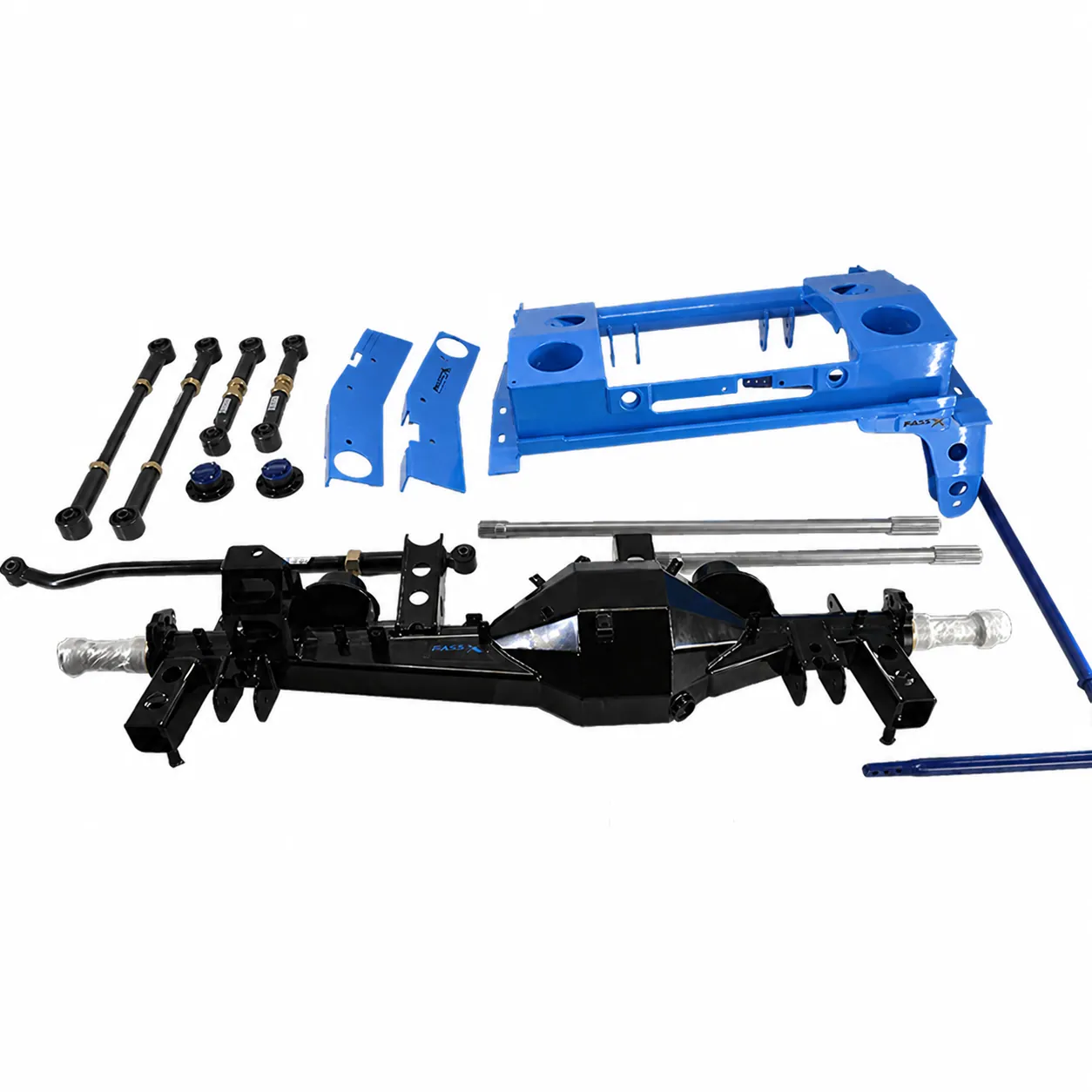
JMACX coil conversion kit components laid out: blue structural cradle, chassis side plates, trailing arms, panhard rod, sway bar, axle shafts and wide-track differential housing
Structural cradle and side platesThe fully welded foundation of the conversion.

A patented structural cradle and heavy-duty chassis side plates bolt directly into the factory chassis. Three-axis taper-lock locators prevent movement across the mounting planes without welding the vehicle chassis or relying on a multi-piece frame that needs routine retightening.

Track-correction differential housingA fabricated 3000 kg-rated wide-track housing.

The replacement heavy-duty housing widens the rear track to correct the factory 100 mm front-to-rear mismatch. Chromoly spindles support the increased axle load, while the housing carries the coil seats and mounting points required by the 5-link geometry. Factory brakes, hubs, bearings, seals and lockers are retained.

Full-floating axle kitHigh-strength 300M or chromoly axle shafts.

In a full-floating arrangement, vehicle weight is carried through the housing, spindles and hubs rather than through the axle shafts. The heavy-duty shafts, drive plates and caps are dedicated to transmitting drive torque in high-load applications.

Upper and lower trailing armsFour adjustable links control axle movement and rotation.

The lower arms carry the primary acceleration and braking loads. The upper arms control axle rotation and provide adjustment for suspension geometry and pinion angle. The arms use Toyota-style bushes to support practical servicing and replacement-part availability.

Adjustable rear panhard rodThe fifth link controls lateral axle location.

The solid adjustable panhard rod resists side loads and keeps the differential centred beneath the chassis as the suspension moves. It is critical to predictable handling when cornering, carrying an uneven payload or operating with a high centre of gravity.

Adjustable rear sway barControls body roll while preserving useful articulation.

The heavy-duty adjustable sway bar and custom link kit connect both sides of the axle to tune roll resistance. Adjustment allows the installer to balance body control against articulation for the vehicle's finished weight and intended use.

Tower mounts and coil seatsPurpose-built upper and lower spring load points.

Custom-fit tower mounts and rear coil seats place the springs correctly relative to the chassis and axle. Together with the cradle, they create the structural load path that allows the coil system to support the vehicle consistently through compression and articulation.

Braking and routing hardwareExtended hoses, tabs and line-management brackets.

Flexible extended rear brake hoses, handbrake tabs, fuel-line brackets and brake-line brackets accommodate the replacement housing and increased suspension movement while keeping critical lines clear of moving parts.

High-tensile fitting hardwareMatched fasteners and chassis locators.

High-tensile frame bolts, control-arm bolts and chassis locators are supplied for the conversion. Each group is matched to the structural cradle, links and factory mounting points used by the complete system.

Before installation

Builder and planning notes

Springs and shocks

The basic kit provides the structural and mechanical framework. Coil springs and shock absorbers are specified separately to suit the vehicle's finished weight, load distribution and intended use.

Exhaust clearance

The original exhaust must be modified or replaced to clear the 5-link geometry. A compatible 3.5-inch DPF-back system is one possible solution, subject to the exact vehicle specification.

Wheels, tyres and approval

Wheel and tyre load ratings must match the completed vehicle specification. Confirm South African certification, engineering and registration requirements with the approved installer before the build.

Ask about a coil conversion for your 70 Series.

Coil conversions are information and enquiry only. Exact components, ride height, wheel and tyre requirements, GVM figures and engineering outcomes are confirmed for each vehicle. South African registration and engineering requirements are established during the enquiry and assessment process.

Next action

Ask about a coil conversion for your 70 Series.

Send the exact vehicle, year, engine, current accessories, permanent front and rear loads and intended use.

Open contact structure