

The Rural Driver's Guide to 4x4 Protection Accessories in South Africa
The Toyota Hilux or Land Cruiser sitting in the yard of a South African farm covers more genuine rough-terrain kilometres in a single month than most weekend overlanders accumulate in a year. Not on a dramatic recovery trail with a winch party standing by. On the farm road between the house and the dam.
On the gravel track to the neighbouring property. On the district road into town that has not seen a grader since the last municipal budget meeting. This is daily driving, and it is quietly punishing in a way that a once-a-year Sani Pass trip simply is not.
4×4 protection accessories in South Africa are made for the rural driver who puts real kilometres on rough terrain every week, and for whom a breakdown at the far end of a farm is not an inconvenience but a troublesome operational problem.
The accessories that are a must for this kind of use are not the same ones that matter for the weekend trail enthusiast, and knowing the difference saves money and prevents the kind of damage that only becomes visible when it is already expensive.

The Farm Road and the 4x4
Farm roads produce 4 categories of vehicle damage that tarmac driving does not:
Corrugated gravel road vibration is a significant and underestimated mechanical stressor, and if you live out of town, you know exactly what we are talking about.
Gravel road corrugation generates sustained vibration frequencies between 10 and 15Hz, which falls directly within the resonance range of vehicle body panels, loose fasteners, and electrical connector housings.
Over 50 000 kilometres of gravel road use, this vibration causes more cumulative mechanical wear than the same distance on tar.
South Africa has approximately 750 000km of unpaved road, accounting for roughly 80% of the total road network. Most of this is in rural farming regions. A farm vehicle covering 30,000km per year on this network reaches the equivalent mechanical age of a 100,000km urban vehicle within 3 years, based on wear rate data from leading 4×4 workshop operators in Mpumalanga and Limpopo.
The 6 Protection Accessories for Farm Driving
| Accessory | What It Protects | Priority for Farm Use | Replacement Cost Without Protection |
| Underbody skid plates (full set) | Sump, gearbox, transfer case, fuel tank | Critical | R8,000 to R45,000 for sump or transfer case replacement |
| Stone guard/bonnet protector | Windscreen, bonnet, headlights | High | R4,500 to R12,000 for windscreen replacement |
| Rock sliders/side steps | Door sills, body panels | High for narrow farm tracks | R6,000 to R20,000 for panel repair |
| Bash bar/bull bar | Front end against animal strikes and ditch entry | Critical in livestock areas | R15,000 to R60,000 for front-end collision repair |
| Dust-sealed cab filtration | Interior air quality, electronics | High on dry gravel routes | R2,000 to R8,000 for electrical fault finding and repair |
| Suspension upgrade (springs and dampers) | Ride quality, load capacity, fatigue resistance | Essential for loaded farm use | R5,000 to R18,000 for factory suspension replacement |
Underbody Protection
Underbody skid plates are the single most important 4×4 protection accessory for South African farm driving.
A full set covers the engine sump, gearbox, transfer case, and fuel tank against rock impact and ridgeline strikes that happen at low speed but with significant force on rutted and rocky farm tracks.
The factory underbody protection on most bakkies and 4x4s, including the Toyota Hilux, Ford Ranger, and Isuzu D-Max, is pressed steel rated for occasional light off-road use.
It is not rated for sustained farm road use on rocky terrain.
A 3mm or 5mm steel or aluminium bash plate set, professionally fitted and correctly bracketed to the chassis rather than the body, provides meaningful protection that the factory fitment does not.
The cost of a full underbody skid plate set from a quality South African supplier ranges from R4 500 to R12 000 depending on material and vehicle model.
A single sump replacement on a modern common-rail diesel ranges from R8 000 to R45 000 depending on the engine. The arithmetic is not complicated.
The Bush Bar Versus the Bull Bar
A bull bar is a full front protection structure covering the bumper, radiator grille, and headlight area, typically made from 50mm to 75mm steel tube or aluminium.
A bash bar, also called a nudge bar, protects the central bumper section only and is lighter and less obstructive.
For farm use in livestock areas or on roads where animal strikes are a realistic possibility, a full bull bar is the correct fitment. For farm tracks with overhanging vegetation and tight clearances, a bash bar reduces branch damage without the weight penalty of a full bull bar.
Both types can change the vehicle’s pedestrian impact behaviour and affect the airbag deployment profile.
Professional fitting by a workshop that understands the vehicle’s safety systems is not optional. A bull bar bolted to the bumper brackets without chassis mounting transfers impact force directly into the body rather than the chassis, which negates most of the protection it is supposed to provide.
Suspension and the Loaded Farm Vehicle
A farm bakkie does real work, and it is often used to move heavy loads, like animal feed, tanks of water, or even something like a couple of bags of cement.
The factory suspension on most modern double-cab bakkies is calibrated for a 70 to 80% payload capacity to balance ride comfort for urban use. Under sustained loading on corrugated gravel roads, the factory springs and dampers reach their fatigue limit significantly earlier than the manufacturer’s service intervals suggest.
An aftermarket suspension upgrade with progressive-rate springs and quality monotube dampers raises the load capacity to the vehicle’s rated GVM, improves tracking on corrugated roads, and extends the service life of steering and wheel-bearing components by reducing the peak shock loads they absorb at every pothole.
For any farm vehicle, especially those carrying regular payloads, this is a maintenance investment that pays for itself in reduced repair frequency within 2 to 3 years.
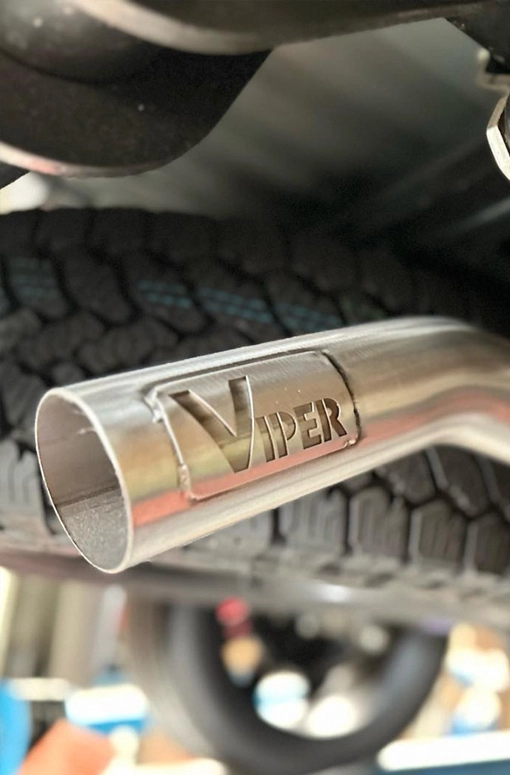
Venture 4×4 in Mbombela stocks and fits underbody protection, bull bars, rock sliders, and suspension upgrades for the most common farm 4×4 platforms including the Toyota Hilux, Land Cruiser 70 and 80 series, Ford Ranger, Isuzu D-Max, and GWM Tank 500. All fitting is done in-workshop with the correct vehicle-specific mounting hardware.
Frequently Asked Questions
What are the best 4x4 protection accessories for South African farm roads?
The 6 most important 4×4 protection accessories for South African farm roads are underbody skid plates (sump, gearbox, transfer case, and fuel tank protection), stone guards and bonnet protectors, rock sliders, bull bars or bash bars for animal strike protection, dust-sealed cab filtration systems, and upgraded suspension with progressive springs and quality dampers. Underbody skid plates are the highest priority item for rocky farm tracks. A full skid plate set costs between R4,500 and R12,000 from a quality South African supplier, compared to R8,000 to R45,000 for a sump or transfer case replacement.
Do I need a bull bar on my 4x4 for farm use in South Africa?
Yes, a bull bar is a necessary 4×4 protection accessory for farm use in South African livestock areas. Animal strikes on farm roads are a realistic daily risk for rural drivers, and factory bumpers are not designed to absorb the impact of a cow or kudu strike at 60km/h. A full bull bar made from 50mm to 75mm steel or aluminium tube provides structural protection for the radiator, headlights, and front-end components. Professional chassis-mounted fitting is essential: a bull bar bolted only to bumper brackets transfers impact force to the body rather than the chassis, which reduces its protective value significantly.
How often do suspension components need replacing on a farm 4x4 in South Africa?
Suspension components on a South African farm 4×4 carrying regular payloads on gravel roads typically require inspection every 30,000km and replacement every 60,000 to 80,000km, compared to the manufacturer’s standard service interval of 80,000 to 120,000km for tarmac use. Corrugated gravel road vibration at 10 to 15Hz generates sustained fatigue loading on shock absorbers, springs, and steering components that accelerates wear beyond tarmac ratings. An aftermarket suspension upgrade with progressive springs and quality monotube dampers extends service life and reduces the peak shock loading on wheel bearings and steering joints, lowering overall maintenance costs for rural vehicles.
What underbody protection does a Toyota Hilux need for farm road use?
A Toyota Hilux used on South African farm roads requires a 3-piece or 4-piece underbody skid plate set covering the engine sump, gearbox, transfer case, and fuel tank. The factory underbody protection on the Hilux is pressed steel rated for occasional light off-road use and is not adequate for sustained rocky farm track driving. A 3mm steel or 5mm aluminium replacement set, chassis-mounted rather than body-mounted, provides the protection level required for daily farm use. Skid plate sets for the Toyota Hilux cost between R4,500 and R9,500 from specialist South African 4×4 fitment workshops, depending on material and coverage area.
Where can I get 4x4 protection accessories fitted in Mpumalanga?
4×4 protection accessories including underbody skid plates, bull bars, rock sliders, stone guards, and suspension upgrades are available from Venture 4×4 in Mbombela, Mpumalanga. The workshop fits accessories for the most common farm 4×4 platforms, including the Toyota Hilux, Land Cruiser 70 and 80 series, Ford Ranger, Isuzu D-Max, and GWM Tank series. All fitting uses vehicle-specific mounting hardware rather than generic brackets. Venture 4×4 also supplies rooftop tents and overland accessories for rural and long-distance use. The workshop is based in Mbombela and serves customers across Mpumalanga and the Lowveld region.